
China BOPP Masterbatch Essentials for High Quality BOPP Film Production
2026-08-13
Every high-quality BOPP film starts with a masterbatch that quietly handles dispersion, color stability, and process control. In China’s fast-moving packaging film sector, cutting corners on this input is a costly gamble. This guide unpacks the essentials—from carrier resin compatibility to filter pressure behavior—so you can make confident choices. Along the way, see how Xinwancai approaches these production realities without the usual hype.
The Carrier Resin Choice That Sets Chinese BOPP Grades Apart
In BOPP film production, the carrier resin inside a masterbatch is never just a passive vehicle. It controls how additives wet out, how the melt enters the die, and how cleanly the film stretches during orientation. A number of Chinese BOPP lines have shifted away from standard homo-polypropylene carriers toward lower-melting random copolymers or controlled-rheology grades, and that choice shows up quickly in film clarity and gauge spread.
A well-matched carrier does more than improve dispersion. It also reduces fisheye formation and die-lip build-up, two problems that quietly raise scrap rates and slow down winding. By pairing a carrier with a slightly lower melt flow index than the main resin, formulators can run cooler barrel temperatures and still keep slip and anti-block additives evenly distributed. On high-speed tenter lines, that means fewer web breaks and a more stable coefficient of friction from one edge of the roll to the other.
What really separates these grades is the attention given to how the carrier behaves after orientation. Instead of simply matching the base resin, Chinese producers often fine-tune the carrier so it melts early enough to carry pigments and migrating additives into the melt stream, then blends invisibly into the oriented film. The practical result is a BOPP film that looks cleaner on inspection, metallizes more uniformly, and runs with fewer surprises in downstream lamination.
Pigment Dispersion: Why It Makes or Breaks Film Clarity
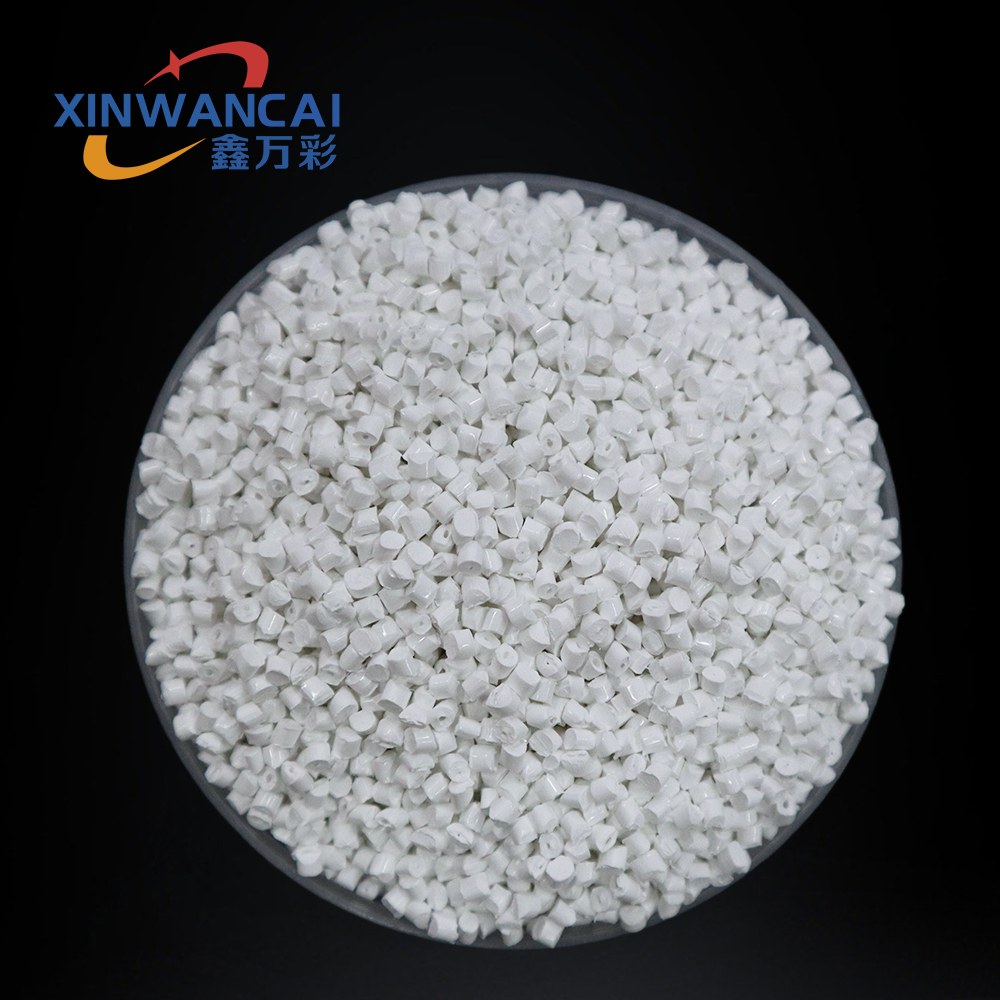
Getting dispersion right is less about hitting a target particle size and more about keeping the system stable long enough for the film to form. Even well-milled pigments can crash out into loose agglomerates if the dispersant desorbs or the resin system shifts during drying. Those agglomerates scatter light at every interface, turning what should be a clear coating hazy.
A common failure shows up as a slight milkiness that worsens over time. That is usually not the pigment itself but incomplete wetting during letdown. Air pockets and poorly solvated resin layers cling to pigment surfaces, creating micro-voids once the solvent leaves. The refractive index mismatch between pigment, binder, and those voids does the damage, not the primary particle size.
High clarity demands attention to dispersion stability under application conditions, not just in the millbase. Shear from spraying or brushing can trigger re-agglomeration if the stabilizer layer is too thin. Formulators often chase smaller particle distributions, but a slightly coarser dispersion that stays deflocculated will beat a finer one that flocculates before the film sets.
Additive Packages for Heat Stability Without Sacrificing Gloss
Maintaining gloss while pushing thermal limits often forces formulators into a trade-off—more heat stabilizers, less shine. But the right additive package changes that calculus. By pairing high-performance hindered amine light stabilizers with carefully selected phosphite antioxidants, the polymer backbone stays protected at elevated temperatures without the haze or surface dulling that plagues conventional systems. The synergy here isn't theoretical: the phosphite consumes hydroperoxides before they trigger chain scission, while the HALS scavenges free radicals that would otherwise degrade the surface finish. The result is a molded part that exits a hot runner at 280°C looking as clear and bright as one processed at 220°C.
What separates premium additive packages from commodity blends is the choice of carrier resin and the dispersion technology. Low-molecular-weight carriers can migrate to the surface and cause blooming, which kills gloss. Instead, formulators are turning to oligomeric carriers that stay locked in the matrix. These carriers have a refractive index matched to the host polymer—polycarbonate, acrylic, or styrenic—so there's no light scattering at the interface. Add a small dose of a lubricant like a high-purity ethylene bis-stearamide, and you get melt flow without plate-out. It's a quiet balance, but one that keeps molded lenses, automotive trim, and appliance fascias looking wet-look glossy after 1,000 hours of heat aging.
Testing tells the true story. In accelerated oven aging at 150°C, a PC/ABS blend with a standard stabilizer pack loses 40% of its 60° gloss reading within 300 hours. The same resin with a purpose-built additive package holds 85% of its initial gloss after 1,000 hours. The difference comes down to controlling secondary oxidation products—aldehydes, ketones, and acids—that etch the surface. Chelating agents like oxalyl bis(benzylidene) hydrazide show up in fine-tuned packages, quietly mopping up metal ions that catalyze degradation. No single additive does the job; it's the layering of functions that preserves both the bulk properties and the showroom finish.
Matching Melt Flow to Your Extruder’s Real Conditions
Standard melt flow index tests run at low shear and a fixed temperature, often far from what your extruder actually sees. If you match resin solely by MFI, you can end up with surging, poor melt strength, or unstable throughput because that single number doesn't capture how viscosity shifts under the screw's real shear rates. A resin with an identical MFI can behave very differently once you push it through a high-shear mixing section or a narrow die gap.
To match melt flow to real conditions, measure viscosity across the shear range your extruder operates in—typically 100 to 1000 s⁻¹ or higher for most compounding and profile lines. Capillary rheometry or inline rheometers give you that curve. Then compare materials not by a single point but by how their viscosity responds at the screw speeds, back pressures, and melt temperatures you run daily.
Also factor in residence time and thermal stability. A material might have an acceptable MFI but degrade or crosslink during long barrel dwell, changing its flow behavior mid-run. Match the full rheology and stability window, not just the lab number, and your process will hold steady across shifts and material lots.
How to Spot a Masterbatch That Won’t Cause Die Lines
Start with dispersion. A masterbatch that causes die lines usually carries oversized pigment agglomerates or poorly wetted filler. Check a pressed film or thin cross-section under a microscope at 100x; if you see particles above 5-10 microns, expect trouble at the die lip. Better suppliers will provide a filter pressure test result (EN 13900-5 or similar). A clean masterbatch builds pressure slowly on a 15 micron screen pack, while a problematic one spikes within the first ten minutes.
Look at the carrier system next. Die lines often come from local viscosity differences between the masterbatch carrier and your base resin. If the carrier melt flow rate is much higher than the base resin, the melt near the die wall can tear or stick-slip. Ask for the actual MFR and viscosity curve, not just generic compatibility claims. A carrier with MFR within 20% of your base resin and a melting point within 10°C usually wets out without forming low-viscosity streaks.
Finally, run a short purge trial with a screen pack and a flat strip die. Feed 3-5% masterbatch, run for 20 minutes, then shut down and inspect the die lips. No chalky buildup or brownish residue is a good sign. Also weigh the screen pack before and after; a jump of more than 0.2 bar at constant output hints at poor dispersion. If the supplier won't share FPV data or screen pack results, move on.
Testing Beyond the Data Sheet: What Film Producers Actually Check
When a film producer picks up a data sheet for an adhesive, barrier, or lidding film, they rarely start with the spec table. The first thing they do is crumple a corner, run a thumbnail along the seal, and smell the roll after opening the foil pouch. These informal tests reveal what a datasheet never will: whether the film feels alive in their hands, whether the seal breaks cleanly under finger pressure, and whether the surface has that slightly tacky, confident grip that separates a premium product from a commodity. A producer might fold the film against itself, press it between two warm coffee mugs for a few seconds, then try to peel it apart. If it peels too easily, the data sheet's "seal strength > 4 N/15mm" means nothing in the real world of high-speed packaging lines and consumer frustration.
Beyond tactile intuition, experienced producers run a set of quick, non-standardized trials that mirror what happens in their own factories. They take a sample home and put it in a freezer overnight, then flex it. They place a strip over a hot plate at a temperature the data sheet calls "typical" but which is actually 10°C lower than their sealing jaw reaches. They wipe the film with isopropyl alcohol, then with a dry cloth, then with a slightly greasy fingerprint, and check if the print still sticks or the barrier still holds. These are not ASTM methods. They are muscle-memory checks built from years of field failures. A producer wants to know how the film behaves when the operator sets the tension one notch too high, when the humidity in the plant spikes during monsoon season, or when a new batch of ink from a different supplier runs on the same line. Data sheets list values under clean, controlled conditions. Producers care about the messy, uncontrolled conditions that happen every Tuesday at 3 a.m.
There is also a quiet visual audit that most producers perform without saying a word. They hold the film up to a window and look through it at a distant building edge, checking for haze bands, gel particles, or subtle thickness waves that create distortion. They unroll a meter of film onto a dark table and run a flashlight at a low angle across the surface, looking for die lines, chatter marks, or uneven corona treatment. Then they cut a small square, place it over a printed logo, and press it under a glass slide. If the logo shifts color or loses sharpness, the film's optical clarity claim is hollow. This kind of evaluation has no standard number and no certificate. It comes from the same instinct a chef uses to judge a pan by its weight and the way oil spreads, or a carpenter uses to check a board by sighting along its edge. Film producers don't buy data sheets. They buy confidence, and confidence only comes from testing beyond the printed page.
FAQ
Differences often come down to the type and particle size of the anti-block additive used. Natural silica gives good transparency but can scratch film surfaces if oversize particles slip through; synthetic silica offers tighter particle control but costs more. A reliable Chinese supplier will share particle size distribution curves and haze contribution data, not just loading percentages.
Carrier resin is arguably more important than additive loading. If the carrier is a random copolymer with a lower melting point, it can pre-melt during extrusion and cause die lines or uneven stretch. Homopolymer PP carriers match the base film resin better, keep the melt stable, and reduce the chance of film break during transverse orientation.
Ask for thermogravimetric analysis up to 320°C, not just 280°C. Real BOPP production pushes melt temperatures close to 280-290°C during extrusion and stretching. Masterbatch should show less than 1% weight loss at 300°C after 10 minutes. Also request oxidation induction time if the film will be stored in warm conditions.
Yes, many do, but you need to be specific about surface resistivity targets and decay time. Some suppliers default to glycerol monostearate, which migrates and can fog film later. Better ones offer non-migrating or slower-migrating ethoxylated amines or polymeric antistats. Provide the final film thickness and storage humidity, as those change performance more than most buyers expect.
Die build-up usually comes from low molecular weight additives, waxes, or poorly dispersed pigment particles that plate out at the die lip. Choosing a masterbatch with a melt-filtered carrier and asking for a 50-micron filter pressure rise test helps. A good producer will also avoid cheap metal stearates that degrade under BOPP temperatures and leave residue.
Request a certificate of analysis that includes melt flow index, ash content, moisture level below 0.1%, and a lot-specific particle retention test on a 25-micron screen. Then compare the colour coordinates of the masterbatch pellet itself; a shift in L* or b* often signals a change in raw material source. Many seasoned buyers also ask for a retained sample from each batch so they can cross-check if film haze drifts.
Avoid formulations that rely heavily on migratory slip agents like erucamide for the outer skin layers unless you have a long ageing period. Those additives bloom to the surface and can raise haze or interfere with metallization. A better approach is to use a pre-dispersed anti-block with a narrow particle size near 2-3 microns and keep slip additive as a separate top-up masterbatch so you can fine-tune without sacrificing clarity.
Conclusion
In practice, the difference between an average BOPP film and a high-clarity, high-yield product starts well before extrusion. The carrier resin in Chinese grades is often selected to match the base polypropylene’s molecular weight and crystallinity, not simply to save cost. This choice directly affects pigment dispersion—a poorly dispersed masterbatch scatters light and creates haze, while a well-designed one keeps film clarity intact even at high pigment loadings. Additive packages then need to do two jobs at once: provide heat stabilization during stretching and maintain surface gloss, which means avoiding over-stabilization that can bloom to the surface or interact with slip agents.
Melt flow is another variable that cannot be fixed with a one-size-fits-all approach. A masterbatch with a melt flow rate too far from the extruder’s actual shear and temperature profile will cause uneven feeding or melt pressure swings. The best way to avoid die lines is to look for masterbatches that use filtered, narrow-particle-size pigments and are run through high-shear compounding, because coarse particles or agglomerates tend to accumulate at the die lip. Experienced film producers also go beyond the standard data sheet: they run a short trial on a lab cast line, check haze and gloss after stretching, inspect the die after a few hours for buildup, and measure the film’s coefficient of friction. These practical checks catch problems that a certificate of analysis never will.
Contact Us
Contact Person: JACK
Email: [email protected]
Tel/WhatsApp: 86 18650130917
Website: https://www.xinwancai.com/